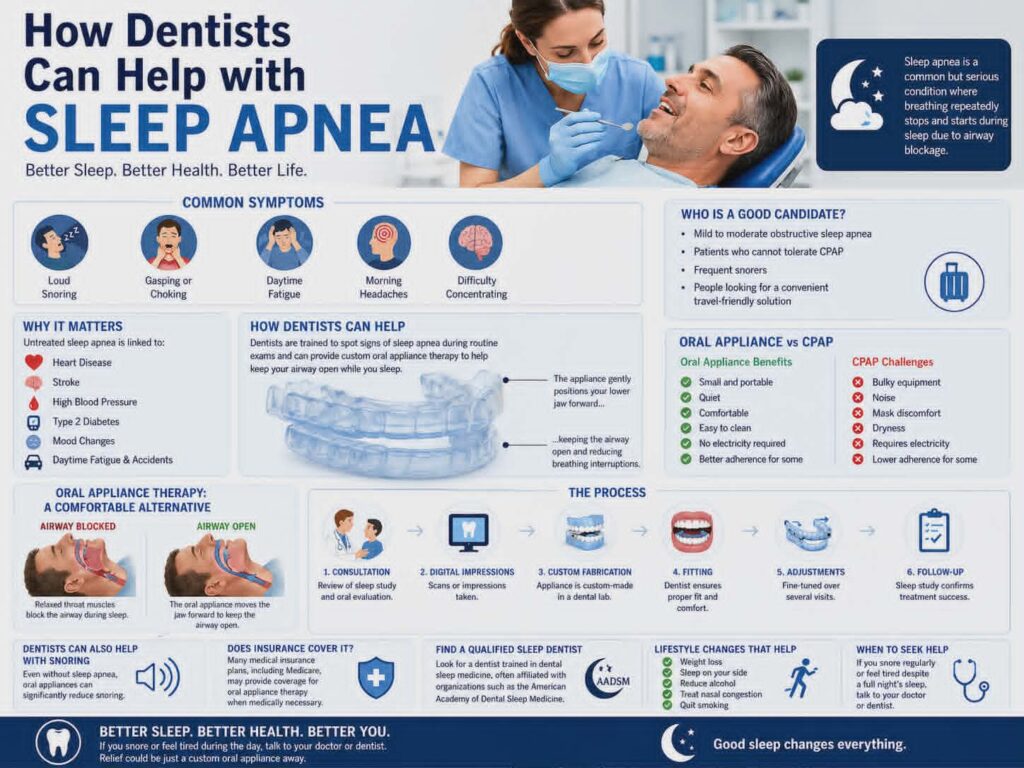
If you snore loudly, wake up feeling exhausted, or your partner says you stop breathing during the night, you may be dealing with sleep apnea.
Most people assume sleep apnea is something only a doctor or sleep specialist can treat. While physicians play a critical role in diagnosis, many patients are surprised to learn that dentists can also be an important part of the solution.
In fact, specially trained dentists can provide highly effective, non-surgical treatments for certain types of sleep apnea, helping patients breathe better, sleep more deeply, and reduce the health risks associated with this common condition.
What Is Sleep Apnea?
Obstructive Sleep Apnea (OSA) is a condition where the airway repeatedly becomes blocked during sleep.
When this happens:
- Breathing temporarily stops
- Oxygen levels drop
- The brain briefly wakes you up to restore breathing
- Sleep quality is disrupted
These interruptions can happen dozens or even hundreds of times per night. Read on and learn about the best sleep apnea treatment
Common Symptoms of Sleep Apnea
Many people live with sleep apnea for years without realizing it.
Typical symptoms include:
- Loud snoring
- Gasping or choking during sleep
- Morning headaches
- Dry mouth upon waking
- Daytime fatigue
- Difficulty concentrating
- Mood changes
- High blood pressure
- Waking up frequently during the night
Why Sleep Apnea Is Serious
Untreated sleep apnea is associated with increased risk of:
- Heart disease
- Stroke
- Type 2 diabetes
- Depression
- Memory issues
- Car accidents caused by drowsy driving
It can also contribute to:
- Teeth grinding
- Jaw pain
- Gum disease
- Chronic fatigue
How Dentists Spot Sleep Apnea
Dentists often notice signs of sleep apnea before a patient receives a formal diagnosis.
During a routine exam, a dentist may identify:
- Excessive tooth wear from grinding
- Enlarged tongue
- Small airway
- Recessed jaw
- Enlarged tonsils
- Dry mouth
- Scalloped tongue edges
Because dentists examine the mouth, jaw, tongue, and airway regularly, they are well positioned to recognize warning signs.
The Dentist’s Role in Treating Sleep Apnea
Dentists do not diagnose sleep apnea on their own. Diagnosis typically requires a sleep study ordered by a physician.
Once diagnosed, a dentist trained in dental sleep medicine can provide treatment using oral appliance therapy.
What Is Oral Appliance Therapy?
Oral appliance therapy uses a custom-made device worn during sleep, similar to a sports mouthguard.
The appliance gently moves the lower jaw forward to keep the airway open.
This reduces:
- Snoring
- Airway collapse
- Breathing interruptions
How It Works
By repositioning the jaw and tongue, the appliance helps prevent soft tissues from blocking the throat.
Who Is a Good Candidate?
Dental sleep appliances are commonly recommended for:
- Mild to moderate obstructive sleep apnea
- Patients who cannot tolerate CPAP
- Frequent snorers
- Travelers seeking a portable alternative
Oral Appliance vs CPAP
Continuous Positive Airway Pressure (CPAP) is often considered the standard treatment for moderate to severe sleep apnea.
However, many patients struggle with CPAP due to:
- Noise
- Mask discomfort
- Dryness
- Claustrophobia
Benefits of Oral Appliances
- Small and portable
- Quiet
- Comfortable
- Easy to clean
- No electricity required
- Better adherence for some patients
What to Expect from a Dental Sleep Appliance
The process usually includes:
1. Consultation
The dentist reviews your sleep study and evaluates your teeth and jaw.
2. Digital Impressions
Scans or impressions are taken to fabricate the appliance.
3. Custom Fabrication
The device is created in a specialized dental lab.
4. Fitting
The dentist ensures proper fit and comfort.
5. Adjustments
The appliance is fine-tuned over several visits.
6. Follow-Up Sleep Study
Testing confirms that the treatment is effective.
Benefits of Treating Sleep Apnea
Patients often report:
- Better sleep quality
- More daytime energy
- Reduced snoring
- Improved concentration
- Better mood
- Lower blood pressure
- Improved quality of life
Can Dentists Help with Snoring?
Yes. Even if you do not have sleep apnea, dentists can provide oral appliances that significantly reduce snoring.
Does Insurance Cover Treatment?
Many medical insurance plans, including Medicare, may provide coverage for oral appliance therapy when medically necessary.
Coverage depends on:
- Diagnosis
- Severity
- Provider documentation
- Insurance plan details
How to Find a Qualified Sleep Dentist
Look for a dentist trained in dental sleep medicine, often affiliated with organizations such as the American Academy of Dental Sleep Medicine.
Questions to Ask Your Dentist
- Are you trained in dental sleep medicine?
- Do you work with sleep physicians?
- What appliances do you use?
- How do you verify treatment success?
- Will you help with insurance paperwork?
Lifestyle Changes That Support Treatment
Along with treatment, your provider may recommend:
- Weight loss
- Sleeping on your side
- Reducing alcohol consumption
- Treating nasal congestion
- Quitting smoking
When to Seek Help
If you snore regularly or feel tired despite a full night’s sleep, talk to your physician or dentist.
Sleep apnea is highly treatable, and treatment can significantly improve your health and energy.
Final Thoughts
Dentists play an increasingly important role in helping patients manage sleep apnea.
With custom oral appliances, many people can enjoy a comfortable alternative to CPAP and finally get the restorative sleep they need.
If you suspect sleep apnea, start by speaking with your healthcare provider and a dentist trained in sleep medicine. A simple mouth appliance could make a profound difference in your sleep, health, and daily life.
Disclaimer:
This article is intended for general informational and educational purposes only and should not be considered a substitute for professional medical advice, diagnosis, or treatment. Please consult a qualified healthcare provider for any health-related concerns or before making decisions about medications or treatment plans. Never disregard or delay seeking professional medical advice based on information found here. In case of a medical emergency, contact your local emergency services immediately.
