Search engine giant Google has rolled out yet another product as it aims to divulge into the healthcare industry. Named Google Helpouts, the service aims to provide virtual help to people in various fields, ranging from IT, engineering, art and music, cooking, education and health. Google had famously failed on its previous venture into the Read more…
Health IT
How interoperable is Health IT in reality?
Interoperability, a term commonly used in the Healthcare sector, is the ability of various systems to meaningfully interact with each other. Important patient data, integration with labs, pharmacies, hospital networks, and many other entities in the Healthcare industry benefit from Interoperability. The Office of Standards and Interoperability (OSI) at the U.S. Department of Health and Read more…
Best practices for mobile text messaging in healthcare

Mobile healthcare is the new avenue for the healthcare IT industry. Be it patients, physicians, providers, payers or hospitals, everyone wants to have the ease of accessing their work through their smartphones or mobile devices. As such, the need to have better and state-of-the-art information technology to deal with mobile healthcare not only increases, but Read more…
How can physicians use social media to their benefit?

Social media has become the new platform where people from all walks of life are interacting and sharing their experiences. Be it the micro-blogging website, Twitter, the more interactive and engaging Facebook or even the video-sharing portal YouTube, there are millions of gigabytes of data being shared across some of the most famous social media Read more…
What are HIT vendors doing for Healthcare advancement?
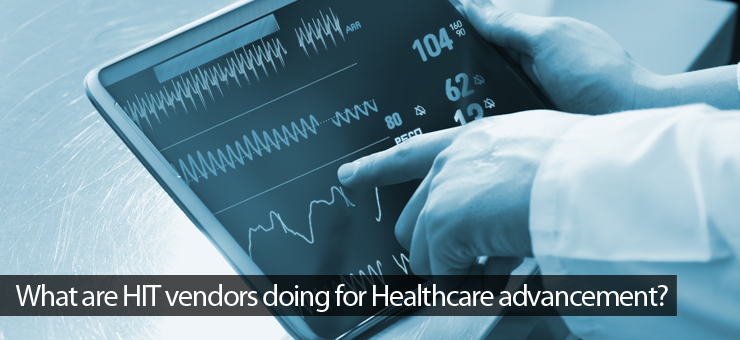
Healthcare IT vendors are driving innovation in the industry through constant research, updates and need-based solutions. Over the years, the industry has seen rapid shift from the otherwise manual and cumbersome process of managing a practice to having completely automated workflows where coordinated healthcare delivery is the main objective. An ever-growing industry, healthcare, has seen Read more…
New study finds physicians can improve workflow with HIT

A recent Johns Hopkins study has found that physicians can see more patients and reduce their workload if they started using Health Information Technology (HIT) based solutions. This study, which was conducted in collaboration with the Commonwealth Fund, underscores the impact of electronic health applications on physician services, and suggests that physician shortage might not Read more…
Does patient satisfaction mean anything to physicians?

The night was clement, the ambience tranquil, but the room bore a murky sheet of the dark hollow that did not aptly depict the feeble condition of the patient turning in bed. A voice, a sudden outcry of directed inquiry, broke the ominous silence that had engulfed the two people in that room, “Are you Read more…
How Secure is Your EMR?
Lauded for the effectiveness in capturing and the dissemination of data, EMRs have improved healthcare productivity with higher outputs as initial benefits to the overall industry. Having tremendous potential, EMR’s still have a long way to go when it comes to securing and protecting sensitive patient health information. There is an increasing concern for security Read more…
Can Healthcare and Social Media team up?

The healthcare industry has undoubtedly benefited a lot from patient-to-patient and patient-to-provider social media interactions. The ability of social media websites to effectively and transparently communicate information in real time presents a wide range of opportunities for the healthcare industry. Most of the healthcare providers use at least one of the social media websites to Read more…
How to Successfully Implement BYOD in the Healthcare Industry
The revolution in the healthcare industry is being fueled by a number of devices which include mobiles, smartphones, tablets, laptops and the like. The concept of bring-your-own-devices (BYOD), is a logical progression of the exponential increase in the number of privately owned smart devices. This approach allows physicians and their support staff to use their Read more…